

Squeeze Momentum [LazyBear] — reading the dots and the histogram
Two things on one pane: the dots tell you when the market is coiling, the histogram tells you which way and how hard it's moving.
Enable it from the chart’s fx Indicators dialog as “Squeeze Momentum Indicator [LazyBear]”.
Read it in 30 seconds
- Look at the dots on the zero line first: BLACK = squeeze ON (volatility compressed, energy building); GRAY = squeeze just released; BLUE = no squeeze.
- When black dots turn gray, the squeeze has fired — now read the histogram for likely direction and strength.
- Histogram above zero (lime/green) = bullish momentum; below zero (red/maroon) = bearish.
- Bright bars (lime/red) = momentum accelerating; dim bars (green/maroon) = momentum fading.
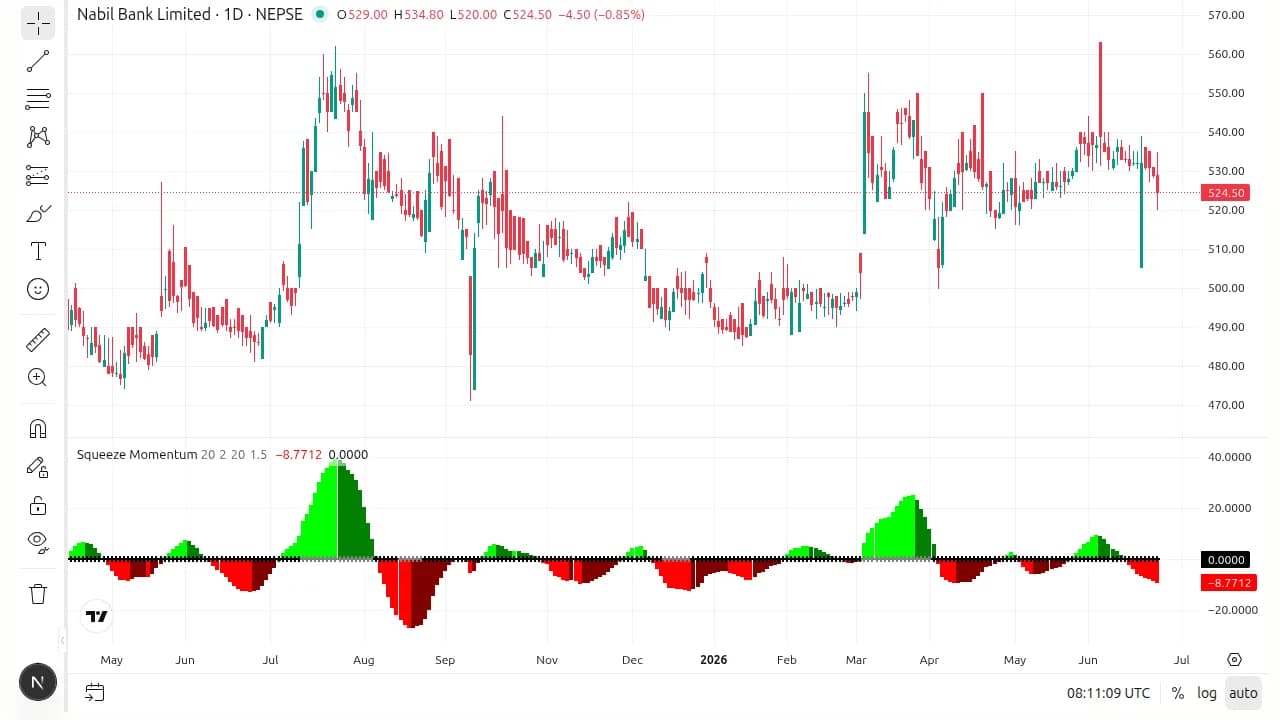
What each element means
- Black dot — squeeze ONActionable
Bollinger Bands are inside the Keltner Channels: volatility is compressed and energy is building. A move often follows.
- Gray dot — squeeze OFF (fired)Actionable
The bands have expanded back outside the channels — the squeeze just released. The energy is being spent now.
- Blue dot — no squeezeInformational
No compression — the market is not coiled. Nothing to anticipate from the dots here.
- Lime bar — bullish & acceleratingInformational
Momentum is positive and rising vs the previous bar — bullish pressure building.
- Green bar — bullish but fadingInformational
Momentum is still positive but lower than the previous bar — bullish push losing steam.
- Red bar — bearish & acceleratingInformational
Momentum is negative and falling further — bearish pressure building.
- Maroon bar — bearish but fadingInformational
Momentum is still negative but recovering toward zero — bearish push losing steam.
Swatches show the indicator’s default colors. If you’ve recolored it (or switched to Monochrome), your chart will differ.
What it tells you
- When the market is coiling (black dots) and when that coil releases (black → gray) — the setup window.
- The direction and acceleration of momentum, from the histogram's color and slope.
- Early warning that a trend is fading: bars dimming (lime→green or red→maroon) before the histogram crosses zero.
What it does not tell you
- The dots do not tell you direction — only that energy is building or releasing.
- A squeeze release is not a guaranteed breakout, and not guaranteed in the histogram's current direction.
- It is not a standalone buy/sell signal — pair it with price structure.
- A squeeze can stay ON for many bars; black dots are not a countdown timer.
Common misreads
- Thinking a black dot means 'sell' — the color is unrelated to direction; it only means the market is coiled.
- Assuming the breakout will go the way the histogram currently points — the release direction can flip.
- Reading the oscillator's zero line as a price support/resistance level — it is momentum, not price.
- Acting on every lime/red bar as a signal rather than as a momentum gauge.
Worked examples
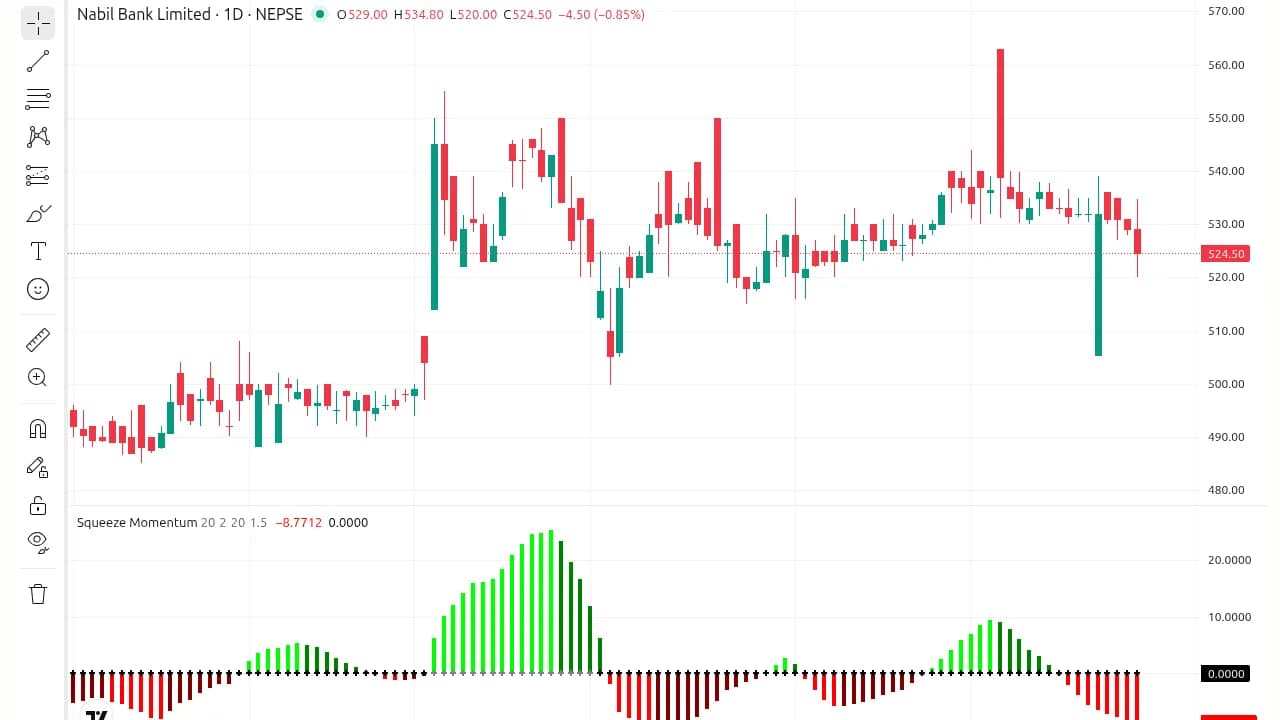
Through February the histogram sat flat with the squeeze coiling; in March it fired lime as price jumped ~10% — momentum and the breakout agreed.
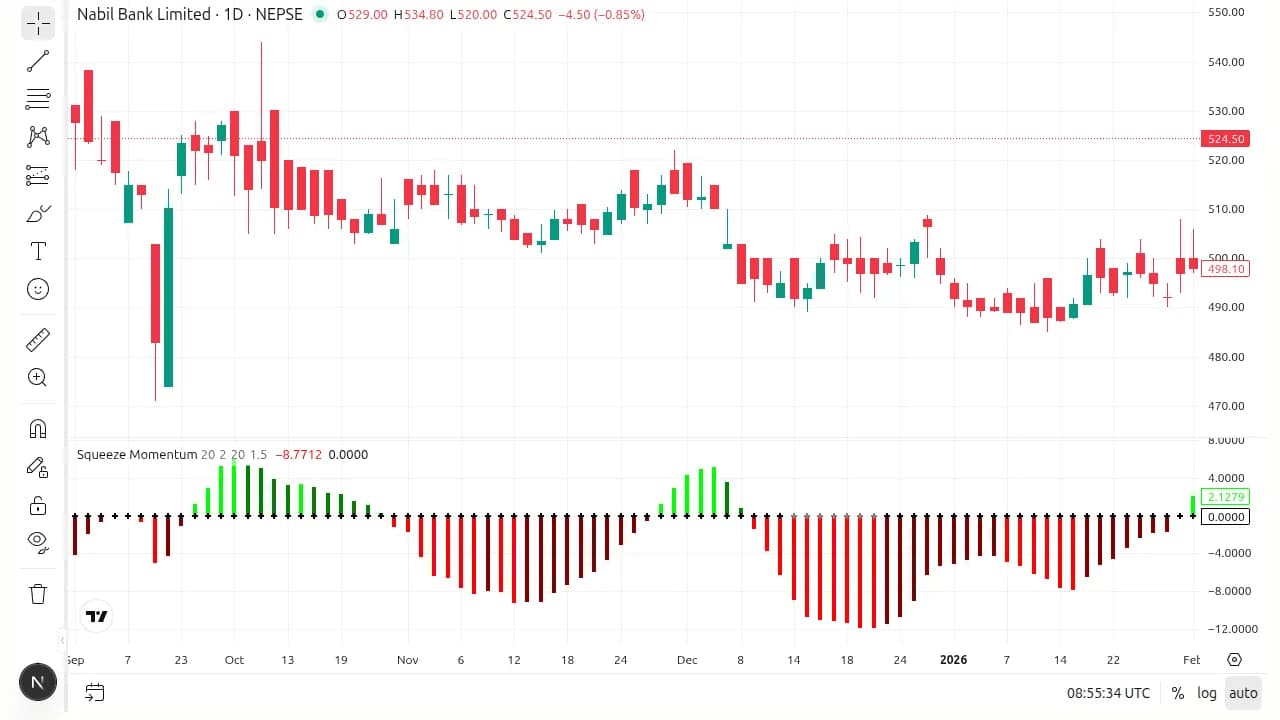
A long sideways stretch: the histogram swung between modest green and red humps without sustaining either, and price went nowhere net. Momentum with no conviction is not a trade.
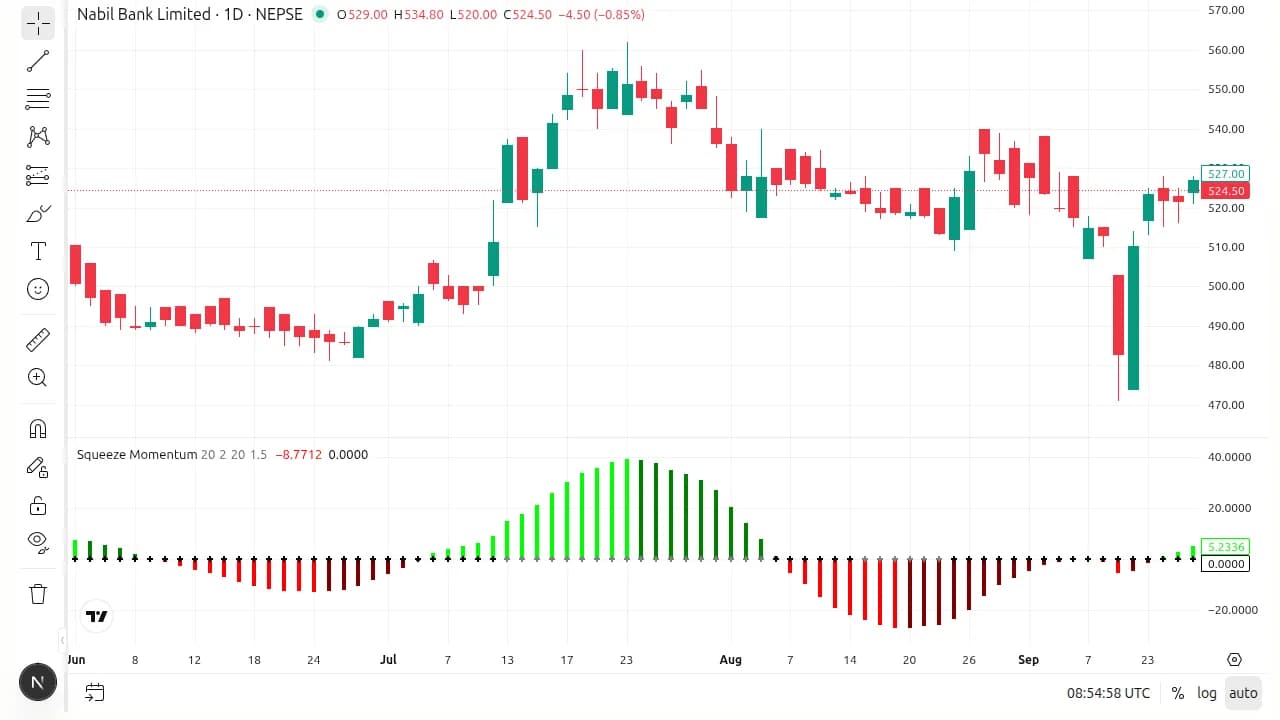
Bars shifted lime → green several candles before price peaked — the fade warned the push was tiring.
Not financial advice. For research and education only.